
Merkel Cell Carcinoma

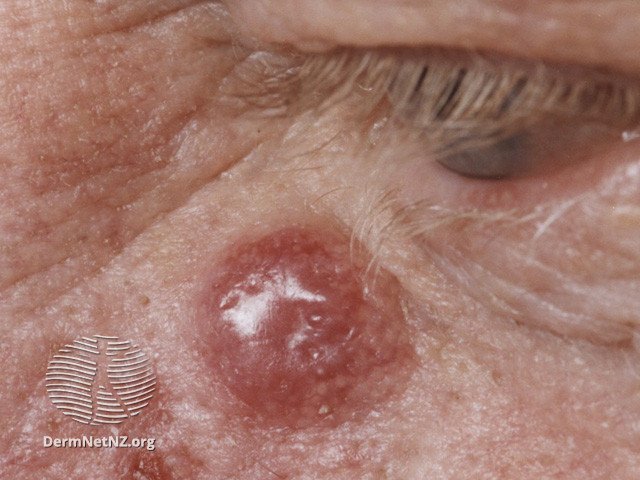
Merkle cell carcinoma is an aggressive skin cancer that can often resemble basal cell carcinoma.
Credit: DermNet NZ
What is Merkel Cell Carcinoma?
Merkel cell carcinoma is a rare, yet aggressive type of skin cancer. It typically appears as a firm, painless lump that varies in color from flesh-toned to red. Though frequently found on the head or neck, it can manifest anywhere on the body and has the potential to spread or metastasize.
What causes Merkel Cell Carcinoma?
Several factors are associated with Merkel cell carcinoma, including:
Ultraviolet exposure
Older age
Immune suppression
Merkel cell polyomavirus in many cases
What are the signs of Merkel Cell Carcinoma?
Possible features include:
A rapidly growing red, pink, violaceous, or skin-colored nodule
A lesion that feels firm
A bump that develops on sun-exposed skin without clear explanation
Because this cancer can progress quickly, prompt evaluation is important.
How is Merkel Cell Carcinoma treated?
Treatment depends on stage and overall clinical context. Common approaches can include:
Lymph node evaluation
Radiation therapy
Systemic therapy for advanced disease
For advanced disease, checkpoint immunotherapy has become an important treatment option. Examples include avelumab, pembrolizumab, and retifanlimab in appropriate settings. These therapies would be at the direction of an oncologist, typically working in conjunction with a dermatologist.
Merkel cell carcinoma can recur or spread, so close follow-up is important. Ongoing skin checks and cancer surveillance are often part of care after diagnosis.
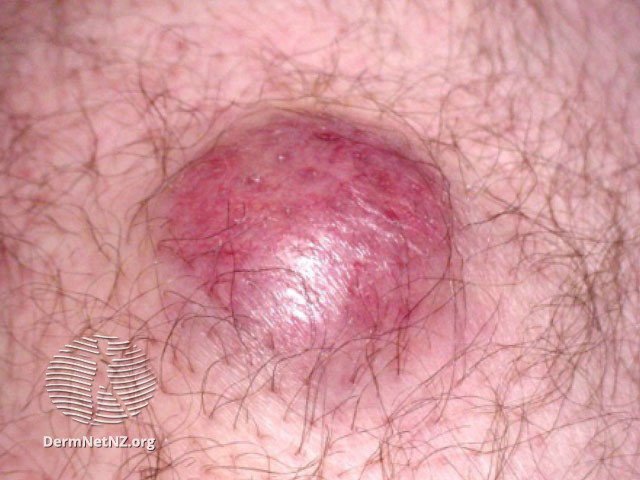
Merkel cell carcinoma can look like a rapidly growing pink or purple bump, often on sun-damaged skin in elderly people.
Credit: DermNet NZ

Merkel cell carcinoma often presents on the head or neck.
Credit: DermNet NZ