
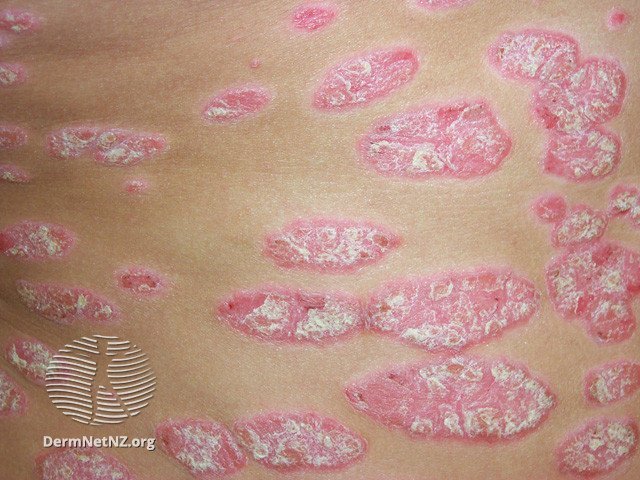
Generalized Pustular Psoriasis (GPP)
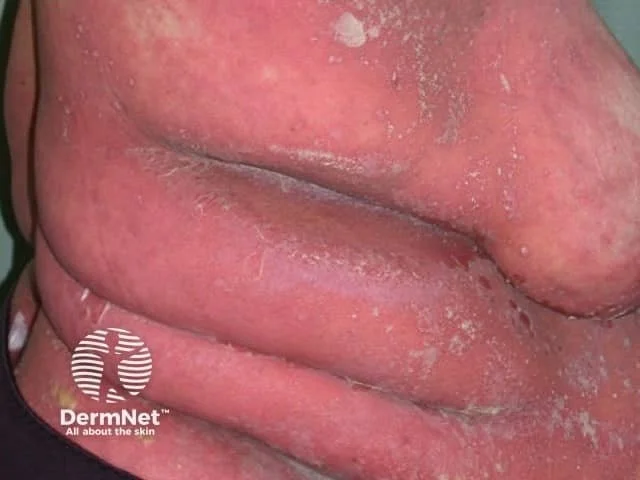
Generalized pustular psoriasis can cause erythroderma (a sunburn like appearance of the skin) and small fluid filled pustules, especially in skin folds.
Credit: DermNet NZ
What is generalized pustular psoriasis?
Generalized pustular psoriasis, often called GPP, is a rare but potentially serious form of psoriasis. Instead of behaving like typical plaque psoriasis, GPP can cause sudden episodes of widespread red skin covered with many sterile pustules. These flares can be painful and may be accompanied by fever, chills, fatigue, or other signs of systemic illness.
GPP is not simply “regular psoriasis with a few pustules.” It is a distinct inflammatory condition that often requires urgent evaluation and treatment.
What causes generalized pustular psoriasis?
GPP is driven by severe immune-system inflammation. Some patients have a personal or family history of psoriasis, but not all do.
Possible contributing factors include:
Immune-system dysregulation
Withdrawal of systemic steroids in some cases
Infections or other medical stressors
Pregnancy in rare cases
Certain medications
Genetic susceptibility in selected patients
Because GPP can look dramatic and can affect the whole body, it is important to distinguish it from infection or other pustular disorders.
What are the symptoms of generalized pustular psoriasis?
Symptoms can include:
Sudden widespread redness of the skin
Many small pustules on inflamed skin
Tenderness, burning, or pain
Fever or chills
Fatigue and feeling ill
Peeling or scaling as a flare improves
Dehydration or other medical complications in severe cases
Some patients experience isolated flares, while others have recurrent disease that needs longer-term management.
How do I treat generalized pustular psoriasis?
Because GPP can become medically serious, treatment often needs to be started quickly.
Treatment may include:
Supportive care and close monitoring during severe flares
Systemic psoriasis treatments in selected patients
Biologic therapy directed at the inflammatory pathways involved in GPP
Spesolimab (Spevigo) in patients with GPP flares and in selected patients needing ongoing targeted treatment
The right treatment approach depends on whether the patient is in an acute flare, how severe the flare is, and whether there is a history of recurrent disease.
When should I seek urgent care?
Prompt evaluation is important if you have widespread painful red skin with pustules, fever, or feel systemically ill. GPP can require urgent dermatology assessment and sometimes hospital-level care.
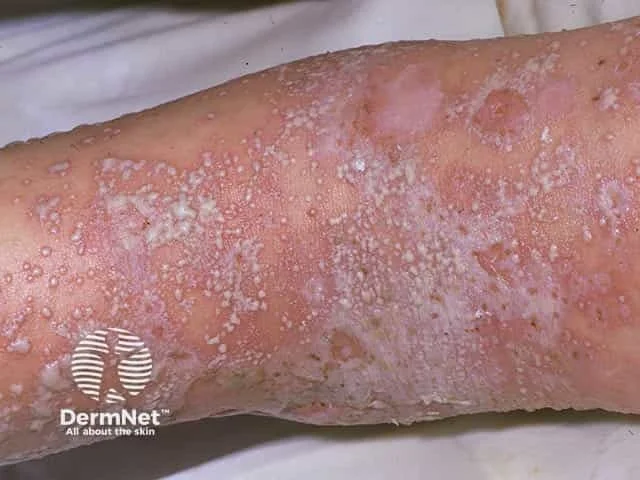
Generalized pustular psoriasis pustules can coalesce into larger areas of involvement as seen on this extremity.
Credit: DermNet NZ
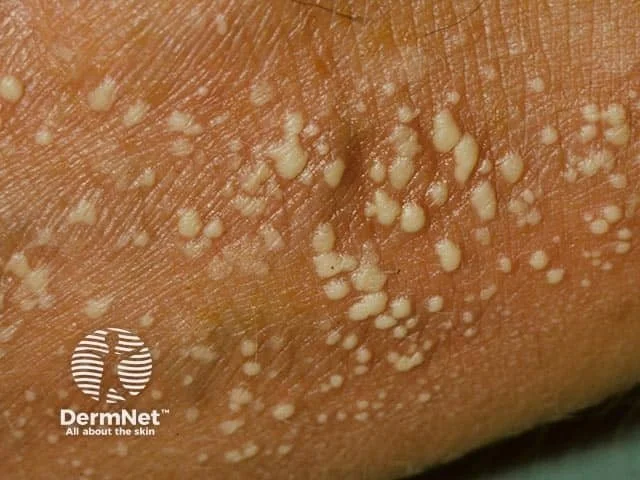
Generalized pustular psoriasis pustules are very superficial and tend to fall off as they heal.
Credit: DermNet NZ