
Squamous Cell Carcinoma: Symptoms and Treatment
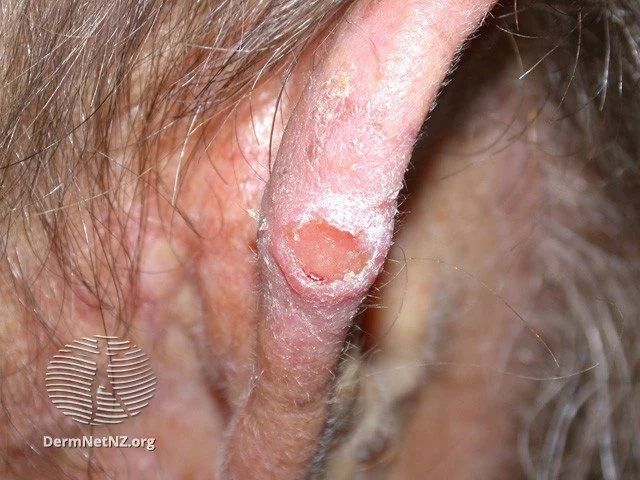
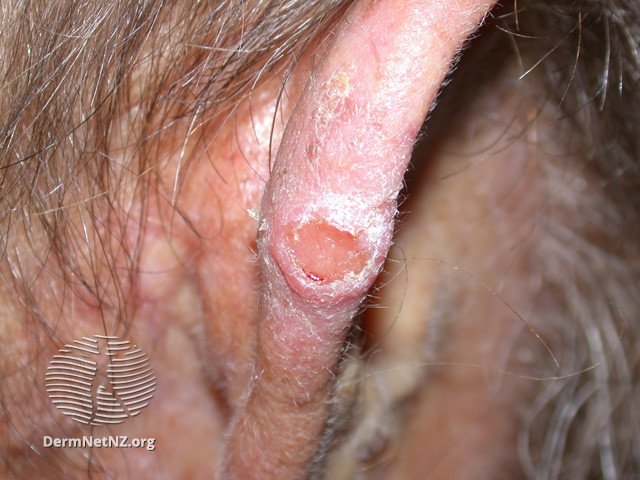
Squamous cell carcinoma, which can show as a nonhealing sore or ulcer on the skin.
Credit: DermNet NZ
What is squamous cell carcinoma?
Squamous cell carcinoma, often shortened to SCC, is a common type of skin cancer that arises from keratin-producing cells in the skin. It often develops on sun-exposed skin and may appear as a tender scaly bump, thick rough spot, nonhealing sore, or crusted plaque.
Most cutaneous squamous cell carcinomas are treatable, especially when found early, but some can grow deeply or spread to lymph nodes or beyond.
What causes squamous cell carcinoma?
The main driver of SCC is cumulative ultraviolet damage over time. Risk rises with:
Chronic sun exposure or sunburns
Tanning bed use
Fair skin
Older age
Immune suppression
Prior radiation or chronic injury in some patients
Certain HPV-related pathways in selected anatomic sites
People who have had one SCC are also at higher risk for future skin cancers.
Presence of actinic keratoses (pre-cancerous skin lesions)
What are the symptoms of squamous cell carcinoma?
The hallmarks of SCC are crusted or scaly lumps, which might ulcerate. They predominantly surface in areas exposed to the sun. Key indicators include:
Progressive growth spanning weeks to months
Sensitivity or pain
Red, scaly patches
Typical locations: face, lips, ears, hands, forearms, and shins
Variable size, from a few millimeters to multiple centimeters
How is squamous cell carcinoma treated?
Treatment depends on tumor size, depth, location, and risk features.
Common treatment approaches include:
Mohs surgery for higher-risk tumors or cosmetically important areas
Curettage and electrodesiccation or other localized treatment for selected very superficial low-risk lesions
Superficial radiation therapy for cosmetically sensitive sites
Systemic therapy, including immunotherapy like cemiplimab (Libtayo), for advanced cases
Management of true invasive SCC is usually centered on surgery rather than topical creams. The safest treatment choice depends on the exact pathology and clinical setting.
How do I prevent squamous cell carcinoma?
Helpful prevention steps include:
Daily sun protection
Avoiding tanning beds
Regular skin checks
Prompt evaluation of changing or nonhealing lesions
Watching closely for recurrence or new skin cancers if you have had prior SCC
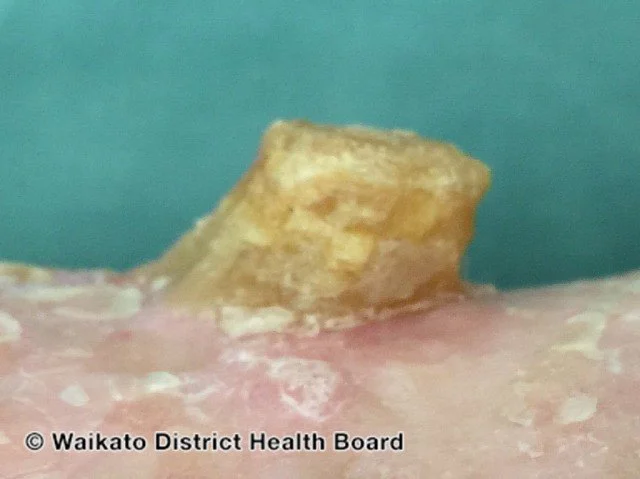
A cutaneous horn, which is a warty growth, can sometimes have an underlying squamous cell carcinoma associated with it.
Credit: DermNet NZ
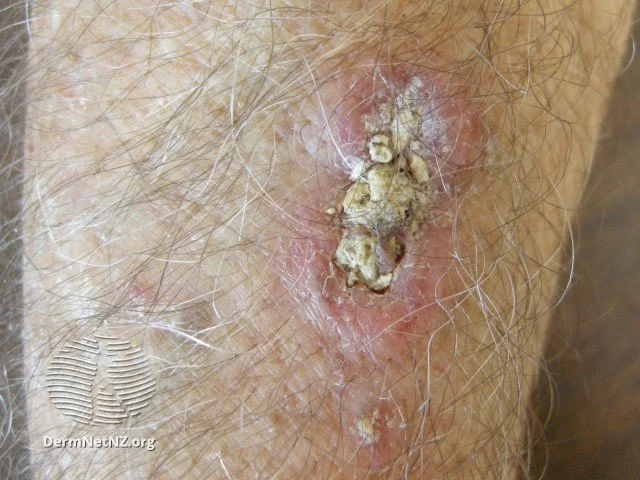
Squamous cell carcinomas are often very crusty due to rapid cell growth.
Credit: DermNet NZ
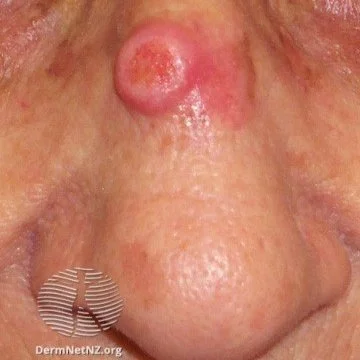
Squamous cell carcinomas can grow rapidly if not treated.
Credit: DermNet NZ