

Actinic Keratosis
Actinic keratosis presents as a rough, scaly red patch on sun-damaged areas. Sometimes you can feel it more than you can see it, and it will feel crusty or sandpapery.
Credit: DermNet NZ
What is an actinic keratosis?
An actinic keratosis (AK) is a precancerous lesion characterized by rough or scaly skin that commonly appears in areas frequently exposed to the sun. Although a small percentage of these lesions may progress to squamous cell carcinoma if left untreated, most do not become cancerous.
AKs are common, especially in fair-skinned patients and in those with significant cumulative sun exposure over time.
What causes actinic keratoses?
Actinic keratoses develop from chronic ultraviolet damage to the skin including sunburns. Over time, repeated sun exposure causes abnormal skin-cell growth, which can lead to these rough spots.
Because they reflect cumulative sun damage, patients with AKs often have more than one lesion and may develop new ones over time.
Additional risk factors include fair skin, a compromised immune system, certain genetic disorders, and infection with human papillomavirus (HPV). Commonly affected areas include the face, scalp, arms, and hands.
What are the symptoms of actinic keratoses?
Symptoms can include:
Rough or sandpaper-like spots on the skin
Pink, red, tan, or skin-colored scaly patches
Lesions that are easier to feel than to see
Tenderness, burning, or itching in some spots
Some AKs stay stable, but others can thicken or become more concerning over time.
How are actinic keratoses treated?
Multiple treatment options are available for actinic keratoses:
Cryotherapy: Application of liquid nitrogen to freeze the lesion
Topical Chemotherapy Creams: Such as 5-fluorouracil (5-FU) or imiquimod
Photodynamic Therapy: Involves the application of a topical photosensitizing agent followed by exposure to specific wavelengths of light
Tirbanibulin (Klisyri) as another topical field-treatment option for appropriate patients
Because AKs are precancerous lesions, regular follow-up is often important, especially in patients with many lesions or a history of skin cancer.
How do I prevent actinic keratoses?
Helpful strategies can include:
Regular sunscreen use
Sun-protective clothing and hats
Avoiding tanning beds
Routine skin exams when recommended
Reporting any lesion that becomes tender, thick, rapidly growing, bleeding, or non-healing
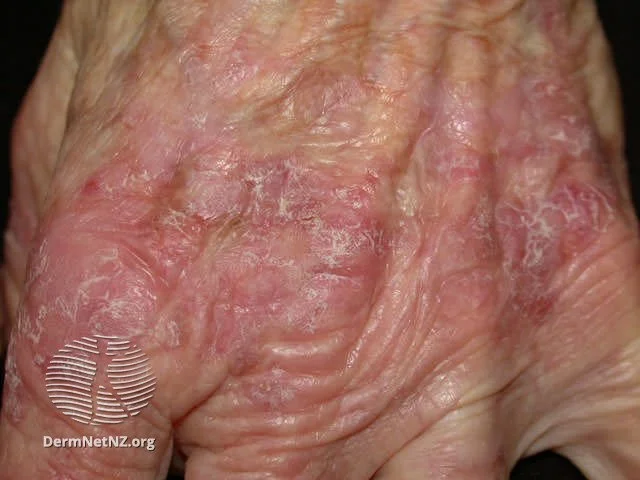
Rough, scaly patches on the back of the hand of a person with sun-damaged skin
Credit: DermNet NZ
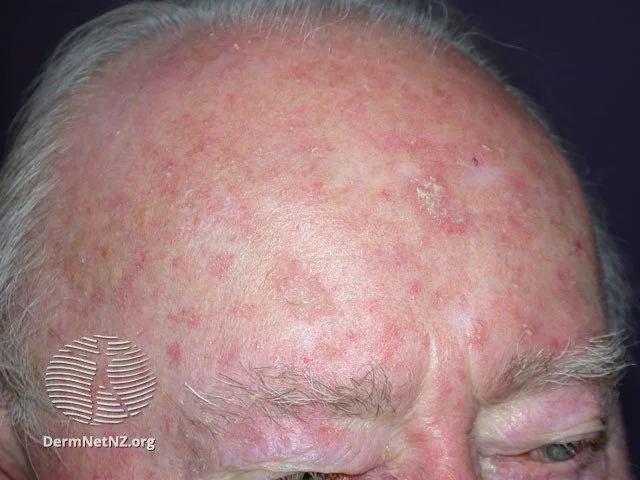
Actinic keratosis can appear as dry skin or look like other skin conditions.
Credit: DermNet NZ