
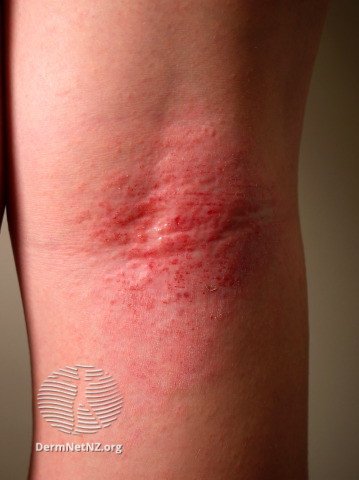
Hand Eczema (Dermatitis)
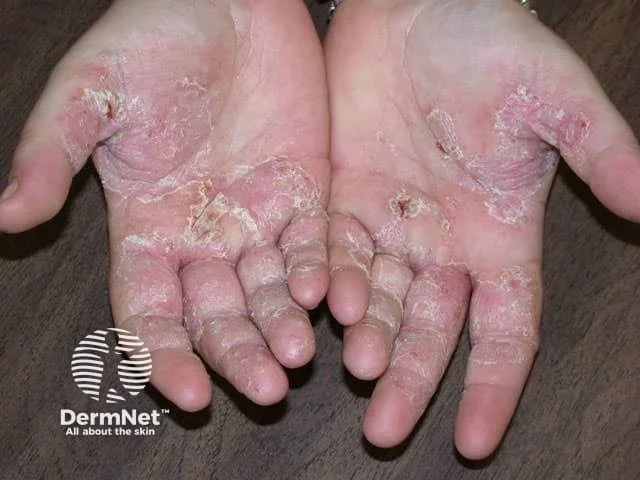
An example of hand eczema, shown here as fissured and cracked plaques on the palms.
Credit: DermNet NZ
What is hand eczema?
Hand eczema is a persistent inflammatory skin condition that affects the hands. It can cause dryness, redness, scaling, cracking, itching, burning, pain, and sometimes blisters. In some patients it overlaps with dyshidrotic eczema, while in others it behaves more like irritant hand dermatitis, allergic contact dermatitis, or a mixed pattern.
Because the hands are constantly exposed to water, soaps, sanitizers, gloves, friction, and workplace irritants, hand eczema can be especially frustrating and can interfere with work, exercise, childcare, and daily routines.
What causes hand eczema?
Hand eczema often develops from more than one factor.
Common contributors include:
Frequent hand washing or sanitizer use
Repeated exposure to soaps, detergents, cleaning products, or workplace chemicals
Allergic contact dermatitis to ingredients such as fragrances, preservatives, rubber accelerators, or metals
An underlying eczema tendency or sensitive skin barrier
Sweating, occlusion, or friction from gloves
Cold weather and low humidity
Some patients have mainly irritant hand eczema, some have allergic hand eczema, and many have a combination. Patch testing may be helpful when allergy is suspected.
What are the symptoms of hand eczema?
Symptoms can include:
Dry, rough, or thickened skin on the hands
Red, inflamed, or itchy patches
Painful cracking or fissures
Scaling or peeling
Burning or stinging
Small deep blisters in some patients, especially when dyshidrotic eczema is part of the picture
Worsening with work exposures, repeated water exposure, or glove use
In long-standing cases, the skin can become thickened and very sensitive, with cycles of partial improvement followed by recurrent flares.
How do I treat hand eczema?
Treatment depends on the severity, the likely triggers, and whether the condition is mostly irritant, allergic, dyshidrotic, or mixed.
Treatment options can include:
Thick fragrance-free moisturizers and barrier-protection measures
Reducing wet-work exposure and avoiding known irritants or allergens
Topical corticosteroids during flares
Nonsteroidal topical medications in selected patients
Patch testing if allergic contact dermatitis is suspected
Phototherapy in more persistent cases
Oral medications in severe or difficult cases
Newer prescription options such as delgocitinib (Anzupgo) cream in selected adults with chronic hand eczema
A successful plan often combines medication with practical hand-protection strategies, because treatment usually works best when the daily triggers are addressed at the same time.
How do I prevent hand eczema flares?
Helpful steps can include:
Moisturizing after every hand washing when possible
Using lukewarm water and gentle cleansers
Wearing protective gloves for cleaning or chemical exposure
Avoiding known allergens and irritating products
Using cotton glove liners when longer glove wear is needed
Treating early signs of a flare before the skin becomes badly cracked

Eczema can commonly affect the cuticles and can cause blistering.
Credit: DermNet NZ
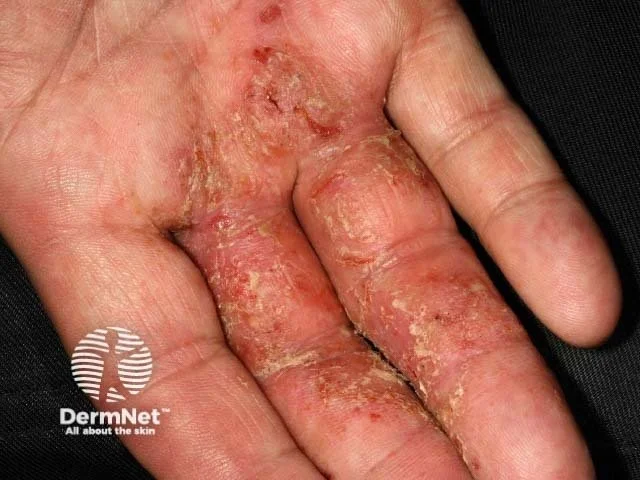
Eczema has a predilection for the fingers, particularly on the sides.
Credit: DermNet NZ
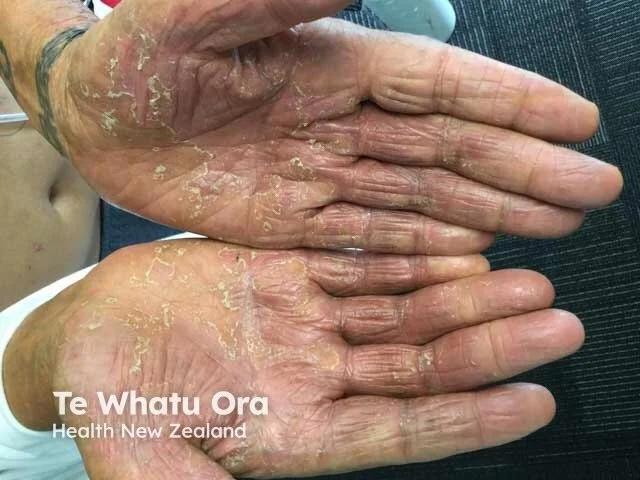
Eczema can cause peeling, scaling, and dryness of the palmar skin.
Credit: DermNet NZ