
Eczema (Atopic Dermatitis): Causes and Treatment

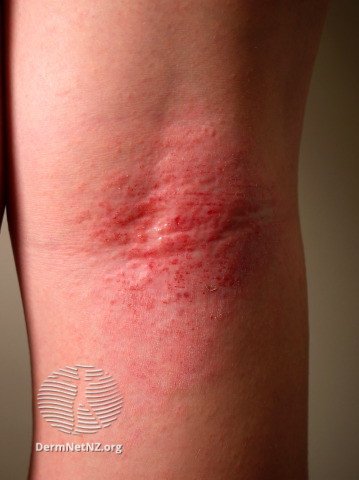
An example of eczema, which commonly presents as small, itchy bumps in the skin creases (behind the knee, in the elbow, or on the neck).
Credit: DermNet NZ
What is eczema?
Eczema, also called atopic dermatitis, is a chronic inflammatory skin condition that causes dry, itchy, sensitive, and inflamed skin. It often begins in childhood, but it can also continue into adulthood or begin later in life.
Eczema is not contagious. However, it can have a major effect on sleep, comfort, self-confidence, and quality of life.
What causes eczema?
Eczema develops from a combination of skin-barrier dysfunction, immune-system overactivity, genetics, and environmental triggers.
Some people with eczema have changes involving filaggrin, a protein that is important for a healthy skin barrier. When the barrier does not work well, the skin loses moisture more easily and becomes more vulnerable to irritants, allergens, and inflammation.
Common triggers can include:
Dry air
Harsh soaps or fragranced products
Wool or rough fabrics
Heat and sweating
Stress
Infections
What are the symptoms of eczema?
Symptoms can vary by age, skin tone, and body site, but often include:
Dry, rough, or sensitive skin
Red, pink, brown, gray, or violaceous patches depending on skin tone
Itching, sometimes severe
Scaling, cracking, or oozing in flares
Thickened skin from repeated rubbing or scratching
Common locations include the face, neck, hands, wrists, inside the elbows, behind the knees, and other skin folds.
How is eczema treated?
Treatment depends on severity, body location, patient age, and prior response to therapy.
Common treatment options include:
Moisturizers and gentle skin care as the foundation of treatment
Topical corticosteroids for many flares
Topical calcineurin inhibitors such as tacrolimus and pimecrolimus
Steroid-free topical options such as crisaborole (Eucrisa), roflumilast (Zoryve), tapinarof (VTAMA), and ruxolitinib (Opzelura) in appropriate situations
Phototherapy for some patients with more widespread disease
Oral medications
Injectable biologics including Dupilumab (Dupixent), Nemolizumab (Nemluvio), Lebrikizumab (Ebglyss), and Tralokinumab (Adbry) when eczema is more significant or not controlled with topical treatment alone
Newer injectable and targeted options have expanded treatment choices considerably for moderate-to-severe eczema.
How do I prevent eczema?
Helpful habits include:
Moisturizing regularly, especially after bathing
Using fragrance-free cleansers and skin-care products
Avoiding known triggers when possible
Keeping showers and baths lukewarm rather than hot
Treating flares early before they become more severe
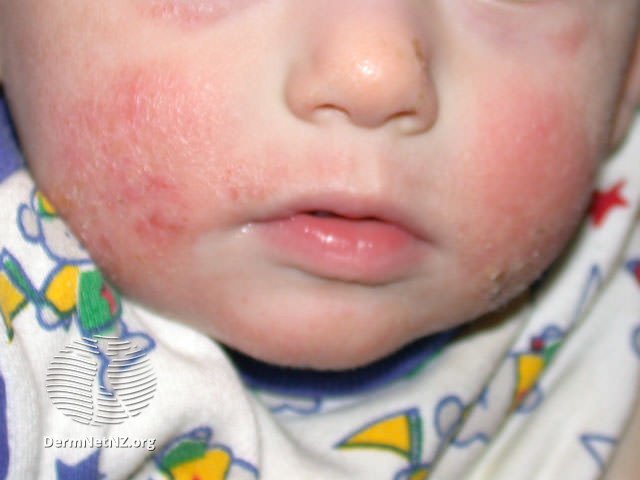
Eczema in infants often can present on the face. In older children, it generally moves to the arms and legs.
Credit: DermNet NZ

Eczema has a predilection for skin folds including the neck.
Credit: DermNet NZ

In skin of color eczema can also involve prominent hyperpigmentation or hypopigmentation.
Credit: DermNet NZ