

Urticaria (Hives)
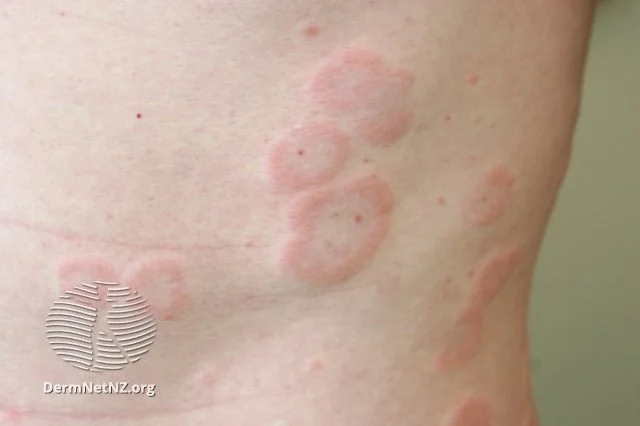
Hives or urticaria appear as itchy, swollen welt-like bumps and plaques on the body.
Credit: DermNet NZ
What Are urticaria?
Urticaria, also called hives, is a condition in which itchy, raised welts develop on the skin. These welts may appear suddenly, move from one area to another, and often come and go within hours. Some people have short-lived episodes, while others develop chronic urticaria that persists or recurs for weeks to months.
In some patients, swelling deeper in the skin can also occur. This is called angioedema and often affects the lips, eyelids, hands, feet, or other soft tissues.
What causes urticaria?
Urticaria can be classified as either acute (lasting less than 6 weeks) or chronic (persisting for more than 6 weeks). In both cases, the underlying mechanism involves the release of histamine, which causes blood vessels to expand and the skin to swell. While the exact trigger might not always be identified, some common causes include:
Acute Urticaria (<6 weeks):
Food allergies, commonly from milk, eggs, peanuts, or shellfish
Allergic reactions to medications, especially antibiotics
Insect stings or bites
Viral or bacterial infections
Environmental factors like cold, heat, or exercise
Pseudoallergies from certain medications, including aspirin, NSAIDs, opiates, and contrast dyes
Vaccinations
Contact with allergens, such as latex
Chronic Urticaria (> 6 weeks):
The exact cause is often unknown, but in roughly half the cases, autoimmune factors play a role. Other possible causes or associations include:
Chronic infections like H. pylori or bowel parasites
Autoimmune disorders, such as lupus, celiac disease, or vitiligo
Thyroid diseases
Blood disorders
What are the symptoms of urticaria?
Symptoms can include:
Itchy, raised welts that can vary in size and shape
Lesions that appear and fade, sometimes in different places over the course of a day
Swelling of the lips, eyelids, hands, feet, or other areas
Burning or stinging in some patients
If swelling affects the tongue, throat, or breathing, urgent medical care is needed.
How are urticaria treated?
Treatment depends on whether hives are acute or chronic and how severe symptoms are.
Common treatment approaches include:
Non-sedating antihistamines, which are usually first-line treatment
Dose adjustment of antihistamines under physician guidance when needed
Short courses of other medications in selected flares
Omalizumab (Xolair) for chronic spontaneous urticaria that does not respond adequately to antihistamines
Dupilumab (Dupixent) in selected chronic spontaneous urticaria patients
Remibrutinib (Rhapsido), an oral treatment option for some patients with chronic spontaneous urticaria
The right choice depends on frequency of symptoms, severity, swelling, prior response to treatment, and the overall clinical picture.
How do I prevent hives from worsening?
Helpful strategies can include:
Taking medications as directed rather than only after symptoms become severe
Avoiding known personal triggers when they are clear
Minimizing tight clothing, heat, and other factors that can aggravate itching
Reviewing new medications, supplements, or recent infections with your provider
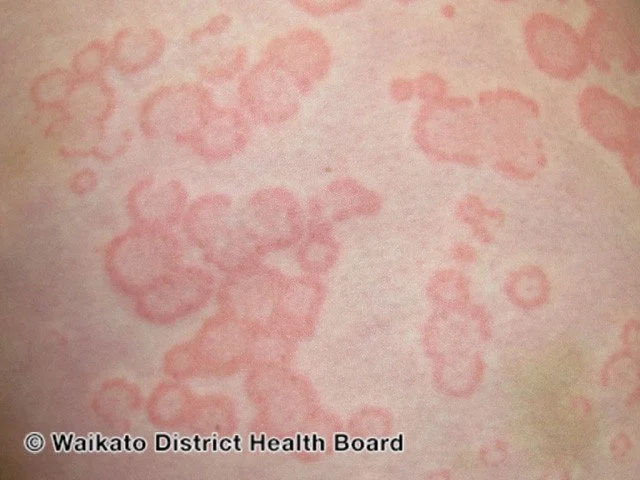
Hives will come and go with individual lesions not lasting longer than 24 hours.
Credit: DermNet NZ

Hives can affect any part of the body including the hands and feet.
Credit: DermNet NZ