
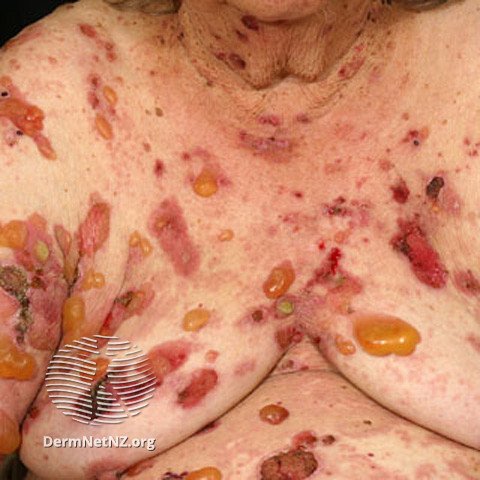
Blistering Disorders

An example of bullous pemphigoid, a blistering disorder, which presents with tense fluid-filled itchy blisters
Credit: DermNet NZ
What are blistering disorders?
Blistering disorders are a group of conditions that cause fragile skin, blisters, erosions, or sores on the skin and sometimes the mouth or other mucous membranes. Some are autoimmune conditions, such as bullous pemphigoid or pemphigus, while others may be inherited or triggered by medications, infections, or other illnesses.
Because the causes and treatments vary widely, unexplained blistering should be evaluated promptly by a dermatologist.
What causes blistering disorders?
Many blistering disorders are autoimmune, meaning the immune system mistakenly attacks proteins that help hold the skin together. This can cause the skin layers to separate and form blisters.
Potential contributing factors can include:
Age, especially for bullous pemphigoid
Certain medications
Underlying autoimmune disease
Genetic conditions in some patients
Infections or other medical stressors in selected cases
A biopsy and special laboratory testing are often needed to determine the exact diagnosis.
What are the symptoms of blistering disorders?
A hallmark symptom across blistering disorders is the appearance of multiple itchy or painful blisters of unknown origin. Upon rupturing, these blisters reveal underlying ulcers or erosions. Additional symptoms, contingent on the specific disorder, include:
In pemphigus, mucosal blistering often precedes skin blistering by weeks to months, and the blisters tend to be flaccid.
Oral blistering can cause difficulty or pain during swallowing.
In bullous pemphigoid, blisters are usually large, tense, and highly itchy.
Preceding appearance of hives or target-like rashes before the onset of blisters.
Presence of smaller blisters or vesicles.
Tiny white bumps on the skin post-healing.
The onset of blistering shortly after starting a new medication, especially accompanied by target-like skin lesions or if the blistering is sudden and affects the mouth, genitals, or eyes, warrants immediate medical attention. This could indicate Stevens-Johnson syndrome, a medical emergency.
How are blistering disorders treated?
Treatment depends on the exact diagnosis, the severity, and how much skin or mucosa is involved.
Possible treatment approaches include:
Topical steroids for limited disease
Oral steroids for more active or widespread disease
Doxycycline and nicotinamide in selected patients, especially in bullous pemphigoid
Steroid-sparing immunosuppressive medications such as mycophenolate or azathioprine
Rituximab or other targeted therapy in selected autoimmune blistering diseases
Dupilumab in some patients with bullous pemphigoid
Wound care and treatment of secondary infection when needed
These conditions often require ongoing follow-up because the right treatment intensity can change over time.
How do I prevent complications from blistering disorders?
Helpful measures can include:
Getting a firm diagnosis rather than self-treating unexplained blisters, this will likely include a biopsy.
Avoiding trauma or friction to fragile skin
Following wound-care instructions carefully
Reporting signs of infection promptly
Reviewing all medications with your physician if a medication trigger is suspected

An example of pemphigus vulgaris, a blistering disorder
Credit: DermNet NZ

Bullous impetigo, an infection that can present as blistering lesions.
Credit: DermNet NZ