
Bullous Pemphigoid

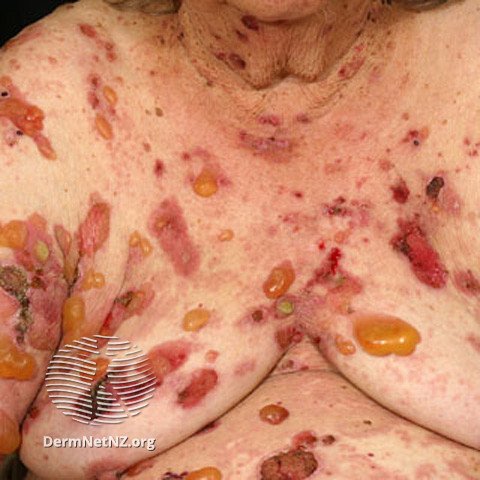
An example of bullous pemphigoid, a blistering disorder, which presents with tense fluid-filled itchy blisters.
Credit: DermNet NZ
What is bullous pemphigoid?
Bullous pemphigoid is an autoimmune blistering disorder that most often affects older adults. It happens when the immune system attacks structures that help attach the outer layer of skin to the deeper layer, leading to inflammation, intense itching, and tense blisters.
In some patients, the condition begins with severe itch, rash, or hive-like plaques before obvious blisters develop. Because it can resemble eczema, hives, or other itchy rashes early on, diagnosis is sometimes delayed.
What causes bullous pemphigoid?
Bullous pemphigoid is caused by an autoimmune reaction against proteins involved in skin adhesion. The exact reason this happens is not always clear.
Potential triggers or associations can include:
Older age
Neurologic disease in some patients
Certain medications in selected cases
Other immune-system changes
Diagnosis often requires a skin biopsy and specialized testing to confirm the blistering pattern.
What are the symptoms of bullous pemphigoid?
Symptoms can include:
Intense itching
Red, irritated, or hive-like patches before blisters appear
Large, tense blisters that do not break as easily as some other blistering conditions
Raw or sore areas after blisters rupture
Crusting or secondary infection in some cases
Occasional involvement of the mouth or other mucosal sites, though skin involvement is more typical
The disease can range from limited to widespread and may flare unpredictably if untreated.
How is bullous pemphigoid treated?
Treatment depends on how extensive the disease is and how quickly it needs to be controlled.
Treatment options can include:
High-potency topical steroids for localized or moderately extensive disease
Oral steroids when faster control is needed
Doxycycline and related anti-inflammatory approaches in selected patients
Steroid-sparing immunosuppressive medications in some cases
Wound care and infection prevention
Newer targeted treatment options such as dupilumab (Dupixent) in selected adults
Management often needs to be individualized, especially in older adults who may be more sensitive to side effects from traditional immunosuppressive treatment.
How do I reduce complications from bullous pemphigoid?
Helpful steps can include:
Getting a firm diagnosis rather than treating chronic blistering as ordinary eczema
Following wound-care instructions carefully
Reporting signs of infection promptly
Avoiding unnecessary skin trauma or friction
Reviewing medications with your physician if a drug trigger is suspected
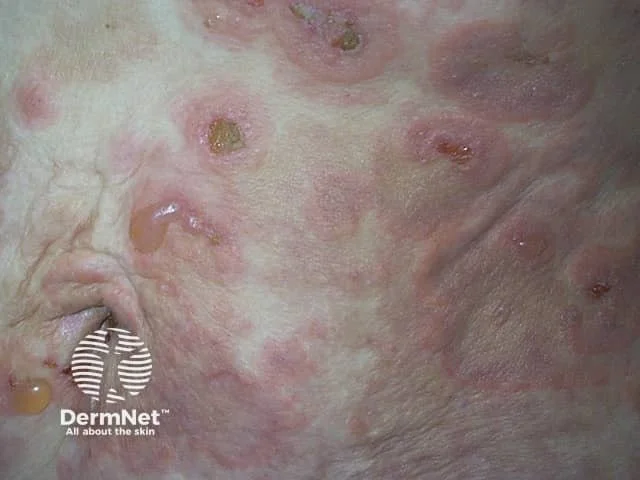
In addition to blisters, bullous pemphigoid can also cause pink, inflamed hive-like patches.
Credit: DermNet NZ
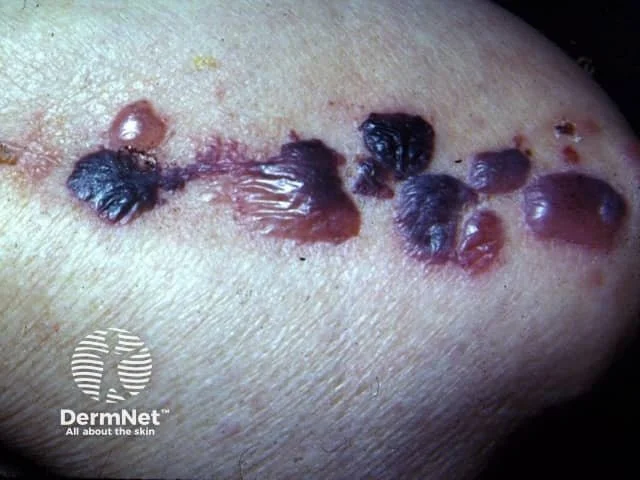
In certain body areas, the blisters of bullous pemphigoid can bleed.
Credit: DermNet NZ