
Rosacea
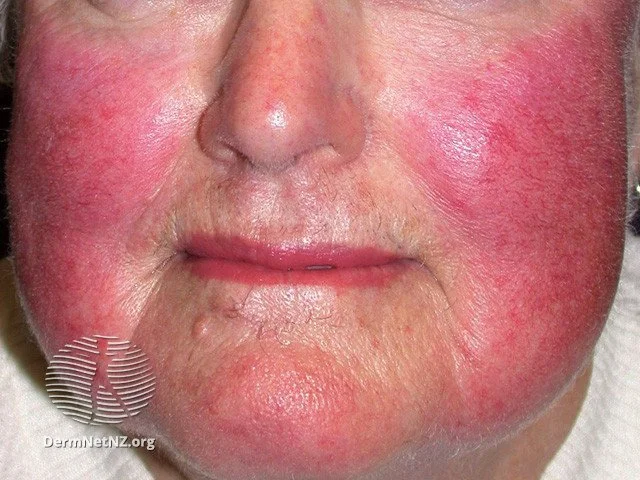
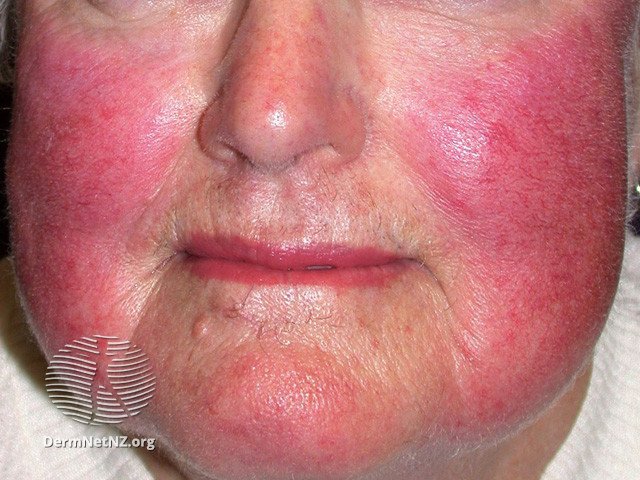
An example of erythrotelangiectatic rosacea, which manifests with background redness and broken blood vessels.
Credit: DermNet NZ
What is rosacea?
Rosacea is a chronic inflammatory skin condition that most often affects the central face. It can cause persistent redness, easy flushing, visible blood vessels, acne-like bumps, burning or stinging, facial swelling, and in some patients eye irritation. Some people have one dominant subtype, while others have a mix of features.
Rosacea commonly appears in adulthood and often tends to come and go in flares. Without treatment, symptoms may gradually become more persistent over time.
What causes rosacea?
The exact etiology of rosacea remains elusive. However, a combination of factors, such as sun exposure, genetics, environment, vascular changes, and inflammation, are believed to contribute. There's also speculation about the role of hair follicle mites, though it's not conclusive. Several triggers can exacerbate rosacea, including:
Prolonged use of topical or oral steroids like prednisone
Extended exposure to sunlight
Consumption of hot or spicy foods
Alcohol consumption
Exposure to extreme temperatures
Emotional stress
Intense physical activity
Some medications
What are the symptoms of rosacea?
Rosacea presents as reddened areas on the face, often accompanied by pus-filled bumps. Unlike acne, it doesn't feature blackheads, whiteheads, or deep nodules. Common symptoms encompass:
Regular blushing or flushing
Visible redness and noticeable blood vessels
Red, raised spots on facial areas such as the nose, forehead, cheeks, and chin
Dry, flaky skin on the face
Sensitivity to products, accompanied by burning or stinging sensations
Eye irritation, manifesting as red or swollen eyelids, bump formation, or styes
A swollen, bulbous nose with pronounced pores
Persistent facial swelling
How is rosacea treated?
Treatment depends on the main subtype and symptoms present.
Common treatment approaches include:
Gentle skin care and daily sun protection
Topical metronidazole, azelaic acid, or ivermectin for inflammatory disease
Brimonidine or oxymetazoline for persistent redness in selected patients
Oral doxycycline or other oral anti-inflammatory therapy for more inflamed flares
Newer prescription options for papulopustular rosacea, including specialized benzoyl peroxide (like Epsolay) or minocycline (like Emrosi) formulations in selected patients
Laser or light-based treatments for visible blood vessels and background redness
Isotretinoin in difficult or severe cases
The best treatment plan depends on whether the main problem is redness, bumps and pustules, visible blood vessels, eye involvement, thickened skin, or a combination of these.
How do I prevent rosacea flares?
Helpful steps can include:
Using sunscreen regularly
Avoiding topical steroids on the face unless specifically directed
Choosing gentle skin-care products
Limiting known personal triggers
Protecting the skin from temperature extremes
Treating symptoms early when flares begin

An example of rhinophyma in rosacea, which presents with dilated oil glands on the nose and general enlargement of the nose, often with a bumpy texture.
Credit: DermNet NZ
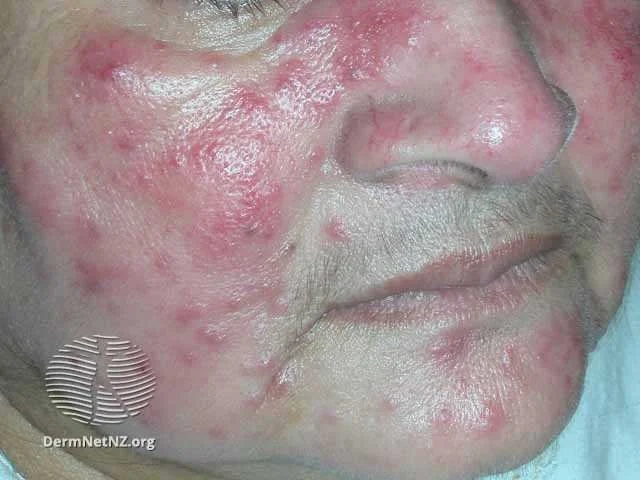
An example of papulopustular rosacea, which manifests as pimple-like bumps on the cheeks and nose, sometimes with background redness, as well as dry, burning sensations on the skin.
Credit: DermNet NZ